
213 tons less plastic.
Not thanks to one big innovation.
Thanks to many small design decisions.
At the end of 2020, our R&D team began working on the Light Family program. The goal was simple in theory but difficult in practice: to design packaging that uses less material without losing functionality or product safety. The first packaging from this family was introduced in February 2021.
Since October 2022, when we started systematically reporting data, the Light Family program has helped reduce plastic use by more than 213 tons. And this is only part of the real impact, because the project began earlier.But lightweighting means more than just less plastic.
It also means a smaller carbon footprint at every stage of the packaging lifecycle:less raw material needed to produce the polymer granulatelower energy consumption during processinglighter transport — less fuel used in logisticsless waste mass in the waste management system
In many cases, a new packaging design also means higher production efficiency. Increasing the number of cavities in the mold by even 50–100% allows production to run faster and consume less energy.Sounds simple?
In reality, every project is about balancing three elements:
✔ mechanical strength
✔ packaging functionality
✔ aesthetics and perceived quality
And there is also a fourth element, often the most difficult: convincing the market that lighter packaging can be just as good.
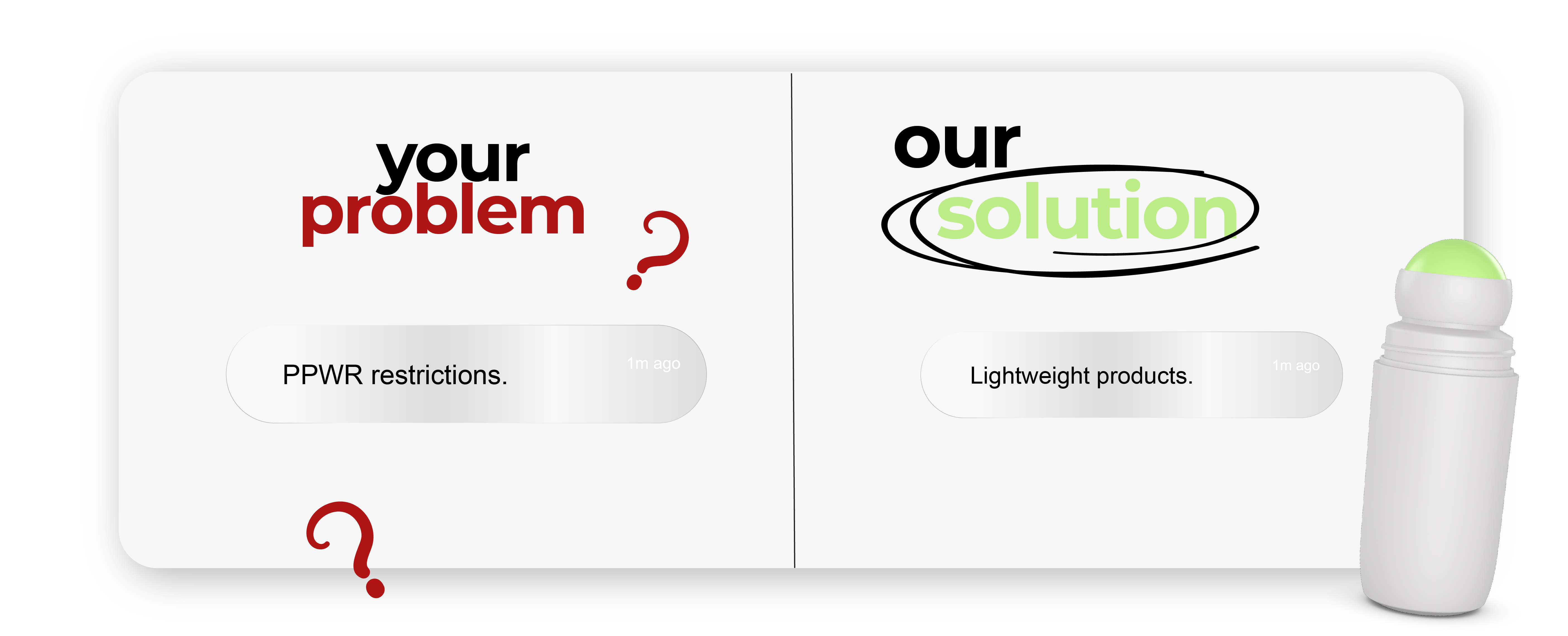
That is why we treat lightweighting not as a one-time project, but as a direction for packaging development. Especially today, as the industry prepares for the upcoming PPWR (Packaging and Packaging Waste Regulation).Our future projects will focus even more on:
further reducing packaging weight
reducing empty space
reducing empty space designing
mono-material solutions
increasing the share of PCR
easier emptying and separation of elements design in line with design for recycling principles
reducing production waste
Because in practice, the transition toward a circular economy does not start with big declarations.It starts with every gram of material that we manage not to use.
